
Secure attachment is often described as the ability to feel comfortable with closeness while still maintaining a sense of independence. But knowing the definition does not necessarily explain what secure attachment actually feels like in everyday life.
For many people, especially those who have experienced inconsistent relationships, betrayal, emotional neglect, or difficult attachment experiences, a healthy relationship can initially feel unfamiliar. There may be an expectation that love should feel intense, uncertain, or constantly reassuring. Secure attachment can feel different. It is often quieter, steadier, and less focused on proving that the relationship is safe.
Secure attachment does not mean never feeling anxious, never arguing, or never needing reassurance. It means having greater confidence that difficulties can be addressed without threatening the entire relationship.
What Is Secure Attachment?
Attachment refers to the emotional bonds people develop with significant others and the ways those bonds influence how they experience closeness, trust, conflict, separation, and emotional support.
In an adult relationship, secure attachment generally involves being able to:
- Feel comfortable with emotional intimacy
- Communicate needs without excessive fear of rejection
- Trust a partner while recognizing that trust develops over time
- Maintain individuality within the relationship
- Handle periods of separation without assuming abandonment
- Repair after conflict
- Offer and receive emotional support
- Set boundaries without automatically fearing the relationship will end
Secure attachment does not mean that someone has perfect emotional regulation or never becomes insecure.
It means insecurity does not necessarily take over the relationship.
What Are the Signs of Secure Attachment in a Relationship?
What Secure Attachment Looks Like in Everyday Relationships
Secure attachment becomes easier to recognize when we look at how it shows up in everyday interactions. The following are some of the ways secure attachment may influence how you communicate, handle vulnerability, maintain boundaries, and navigate challenges within a relationship.

1. You Can Ask for What You Need Without Feeling Ashamed
One of the clearest signs of secure attachment is being able to communicate needs directly.
You might say:
“I need some reassurance right now.”
“I’d like us to spend more time together.”
“That comment hurt me.”
“I need some time alone before we continue this conversation.”
The goal is not to make your partner responsible for regulating every emotion you experience. It is to recognize that having needs does not make you weak, demanding, or burdensome.
In a securely attached relationship, asking for support does not automatically feel like risking rejection.
2. You Can Be Close Without Losing Yourself
Secure attachment involves connection without complete emotional fusion.
You can deeply love your partner while maintaining:
- Friendships
- Personal interests
- Career goals
- Individual routines
- Time alone
- Personal values
- A sense of identity outside the relationship
You do not have to constantly prove your closeness by doing everything together.
At the same time, independence does not require emotional distance.
A securely attached relationship can make room for both:
“I love being with you.”
and
“I am also comfortable being myself.”
3. Conflict Does Not Automatically Feel Like Abandonment
Every couple experiences disagreement.
With insecure attachment patterns, conflict can sometimes trigger much larger fears. A disagreement may quickly become:
“They’re going to leave me.”
“They don’t love me anymore.”
“This relationship is falling apart.”
“I need to fix this immediately.”
Secure attachment does not eliminate emotional reactions to conflict. Instead, there is often a greater ability to distinguish between:
We are having a difficult moment
and
Our relationship is fundamentally unsafe.
Partners can disagree while still believing that the relationship can survive disagreement.
4. You Can Take a Break Without Turning It Into Disconnection
Sometimes emotional regulation requires space.
A securely attached partner can communicate:
“I’m overwhelmed right now. Can we talk about this tonight?”
That is different from using silence as punishment or withdrawing indefinitely.
The important element is predictability.
Taking space does not necessarily mean abandoning the relationship. Both partners can understand that a pause is intended to make the eventual conversation more productive.
This can be particularly important for couples with different conflict styles. One partner may want to talk immediately, while another needs time to process. When those differences keep turning into the same argument, couples therapy can help, and What Happens in the First Couples Therapy Session? explains how that process usually begins.
Secure attachment allows those differences to be negotiated rather than interpreted automatically as rejection or indifference.
5. You Do Not Need Constant Proof That You Are Loved
Relationships naturally involve reassurance.
There is nothing unhealthy about wanting your partner to express affection or remind you that they care.
The difference is whether reassurance becomes an endless requirement for feeling safe.
With insecure attachment, reassurance can sometimes provide temporary relief:
“Do you still love me?”
“Are you sure we’re okay?”
“You’re not going to leave, right?”
But the relief may quickly disappear, leading to the same question again.
Secure attachment allows reassurance to be received without requiring constant repetition.
You can appreciate your partner’s affection while also drawing on your own internal sense of security.

6. You Can Trust Without Ignoring Reality
Secure attachment is not blind trust.
Trust develops through consistent behavior.
A securely attached person can notice when something is genuinely concerning and address it directly.
They do not need to constantly monitor their partner’s phone, analyze every change in tone, or search for hidden signs of rejection simply to feel safe.
At the same time, secure attachment does not require ignoring legitimate breaches of trust.
If a partner repeatedly lies, violates agreements, or behaves in ways that undermine emotional or physical safety, feeling concerned is not automatically an attachment problem.
Healthy attachment includes the ability to recognize when a boundary has been crossed.
7. You Can Be Vulnerable Without Expecting Perfection
Emotional intimacy requires some degree of vulnerability.
You may share fears, insecurities, regrets, hopes, or experiences that are difficult to discuss.
Secure attachment creates space for vulnerability without requiring either partner to respond perfectly every time.
Your partner may occasionally misunderstand you.
You may say something poorly.
You may need to revisit a conversation.
What matters is the ability to repair.
A secure relationship is not one in which nobody gets hurt. It is one in which partners can acknowledge hurt, take responsibility, listen, and work toward repair.
8. You Can Enjoy the Relationship Instead of Constantly Evaluating It
One of the less obvious aspects of secure attachment is the ability to simply experience the relationship.
You are not constantly asking:
“Is this relationship right?”
“Do I feel enough?”
“Are they losing interest?”
“Should I be worried?”
“Why didn’t they text exactly the way they normally do?”
Some reflection is healthy. Relationships deserve thoughtful consideration.
But when monitoring becomes constant, it can become difficult to actually participate in the relationship.
Secure attachment allows more room for presence.
You can enjoy dinner together without analyzing every interaction.
You can spend a weekend apart without assuming something is wrong.
You can experience a quiet period without immediately interpreting it as emotional distance.
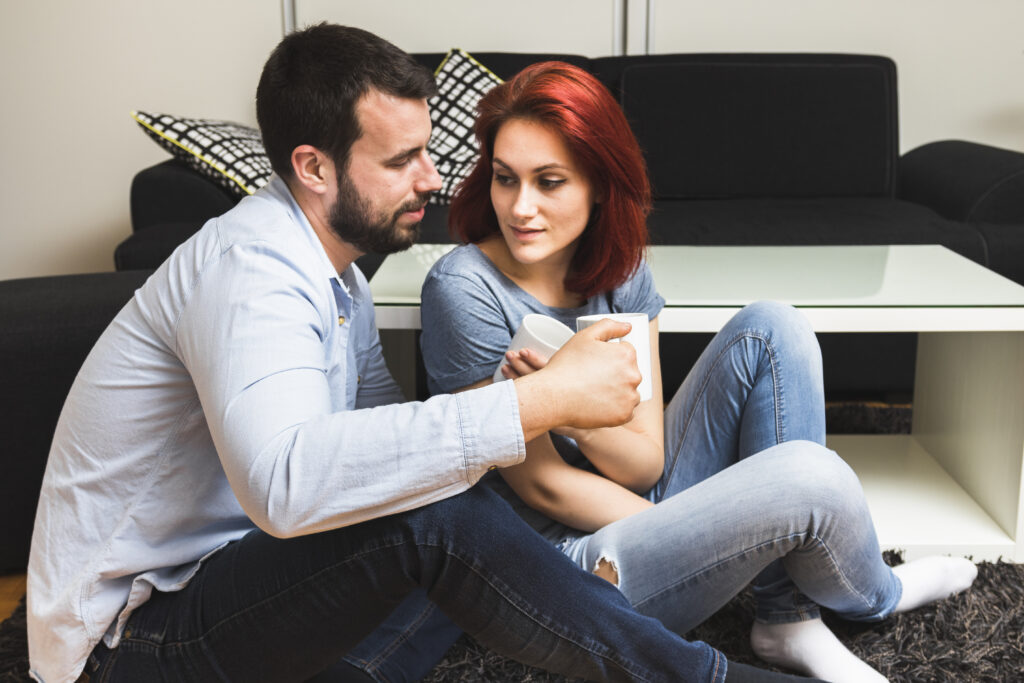
Secure Attachment Does Not Mean You Never Get Triggered
This is important.
Someone with relatively secure attachment can still experience jealousy, anxiety, fear, anger, or insecurity. Attachment patterns are not fixed personality categories.
Major life events, betrayal, pregnancy, becoming parents, illness, grief, relationship transitions, and previous trauma can all affect how safe someone feels in a relationship.
Even securely attached couples can temporarily become less secure when they are under significant stress. The difference is often what happens after the trigger.
Instead of remaining trapped in the reaction, partners can slow down, communicate, understand what happened, and reconnect.
Can You Develop More Secure Attachment?
Attachment patterns can change.
People often develop relationship strategies based on earlier experiences. Someone who learned that closeness was unpredictable may become highly vigilant about rejection. Someone who learned that emotional needs were not welcomed may become uncomfortable depending on others.
These patterns can make sense in the context in which they developed.
But they do not have to determine every future relationship.
A healthy relationship can provide new experiences of consistency, communication, responsiveness, and repair. Therapy can also help people understand the origins of their relationship patterns and develop different ways of responding to emotional triggers. If you are wondering how much difference therapy can make, How Effective Is Couples Therapy? What You Should Know Before Starting offers a closer look.
How Therapy Can Support Secure Attachment
At City Lights Psychology, attachment-focused work considers not only what is happening during a conflict, but also the emotional patterns underneath it.
For individuals, therapy can help explore how earlier relationships and experiences may influence current expectations around closeness, rejection, trust, independence, and vulnerability.
For couples, Emotionally Focused Therapy (EFT) can help partners recognize recurring interaction cycles and communicate underlying emotional needs more directly. Rather than treating one person as “the problem,” the work focuses on the relationship pattern and how both partners become caught within it.
City Lights Psychology also draws from Object Relations psychotherapy and the Gottman Method, depending on the needs and goals of the couple.
The purpose is not to create a relationship in which difficult emotions disappear.
It is to help partners develop greater emotional awareness, communicate more effectively, and build a relationship in which both people can experience connection and autonomy.
What Secure Attachment Ultimately Feels Like
Secure attachment may not always feel exciting in the way uncertainty does.
- It can feel like being able to breathe.
- It can feel like knowing that you can say what you need without automatically expecting rejection.
- It can feel like disagreement without catastrophe.
- It can feel like closeness without losing yourself.
- It can feel like trusting your partner while still trusting yourself.
And perhaps most importantly, it can feel like knowing that relationships do not have to be perfect to be meaningful.
Security comes less from knowing that nothing will ever go wrong and more from developing confidence that you and your partner can face what does go wrong together.
Conclusion
Secure attachment is not about never feeling anxious, needing reassurance, or experiencing conflict. It is about developing enough emotional safety to respond to those experiences without allowing fear to control the relationship.
You can love someone deeply while maintaining your identity. You can ask for reassurance without feeling ashamed. You can experience conflict without assuming the relationship is ending. And you can recognize your own needs while making room for your partner’s.
If your relationship patterns leave you feeling caught between wanting closeness and protecting yourself from it, therapy can provide a space to understand where those patterns come from and explore new ways of relating. At City Lights Psychology, attachment-focused therapy helps individuals and couples develop greater awareness, emotional security, and connection while working at a pace that feels meaningful to them. If you are considering couples therapy, 30 Couples Therapy Questions to Be Prepared For can help you know what to expect.
FAQs About Secure Attachment in Relationships
1. What does secure attachment actually feel like in a relationship?
Secure attachment often feels like being able to feel close to your partner without losing your sense of independence. You can express needs, ask for reassurance, disagree, and experience vulnerability without constantly fearing rejection or abandonment. There is generally a sense of emotional safety and trust.
2. Does secure attachment mean you never argue with your partner?
No. Securely attached couples still disagree, become frustrated, and experience conflict. The difference is often how they handle those moments. Partners can communicate concerns, tolerate differences, repair after arguments, and return to connection without interpreting every disagreement as a threat to the relationship.
3. Can someone with an insecure attachment style develop secure attachment?
Yes. Attachment patterns can change over time. Greater self-awareness, healthier relationships, and therapy can help people develop more secure ways of responding to closeness, conflict, vulnerability, and emotional uncertainty. The goal is not to eliminate emotional reactions but to develop greater flexibility in responding to them.
4. How do I know if I feel emotionally safe with my partner?
Emotional safety can involve feeling comfortable expressing your thoughts and feelings without constantly anticipating rejection, ridicule, or punishment. You may also feel able to set boundaries, ask for support, admit mistakes, and discuss difficult subjects while maintaining a sense that the relationship can withstand honest communication.
5. Can you have secure attachment and still need reassurance?
Absolutely. Secure attachment does not mean never feeling anxious, uncertain, or needing reassurance. It means being able to communicate those needs without becoming completely dependent on your partner’s response for emotional stability. Healthy reassurance can be a normal part of emotional intimacy and connection.
6. What does secure attachment look like during conflict?
During conflict, secure attachment may involve staying engaged without becoming overwhelmed, expressing concerns directly, listening to your partner, and taking a temporary break when necessary. Partners can disagree without treating the conflict as proof that the relationship is failing, and they remain willing to repair afterward.
7. Can couples therapy help develop more secure attachment?
Yes. Couples therapy can help partners identify recurring relational patterns and understand the emotions and needs underneath them. At City Lights Psychology, attachment-focused work can help couples communicate more effectively, strengthen emotional responsiveness, work through conflict, and develop greater security within the relationship.
8. Does secure attachment mean becoming completely independent from your partner?
No. Secure attachment involves both connection and autonomy. A securely attached person can rely on their partner for emotional support while maintaining their own interests, boundaries, friendships, and sense of identity. Healthy dependence and independence can coexist within a strong and emotionally connected relationship.